Brushing Vs Flossing: What’s More Important? Nallakunta Dentist Explains
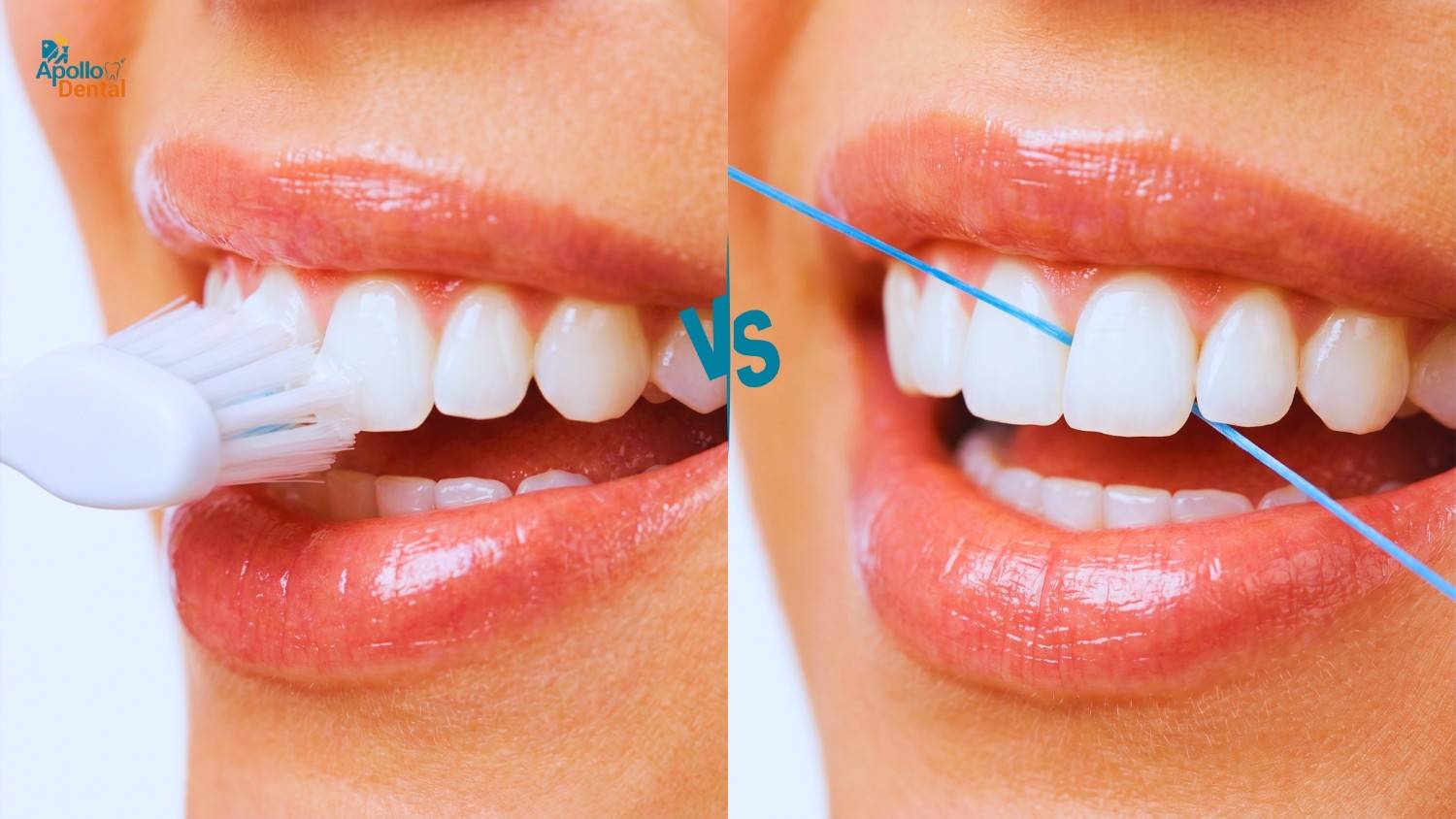
Proper daily oral care relies on both brushing and flossing. Brushing (twice a day) cleans most tooth surfaces and delivers fluoride present in the toothpaste to prevent decay, while flossing (at least once daily) reaches plaque between teeth and along the gumline where toothbrush bristles cannot reach. Using both methods together dramatically lowers plaque and gingivitis risk. This article compares flossing and brushing their benefits, limitations, and correct techniques, and offers clear, evidence-based oral care advice tailored for local community in Hyderabad.
Why Brushing Matters
Brushing is the foundation of daily oral hygiene routine. Dentists recommend brushing your teeth at least twice a day with a soft-bristled toothbrush and fluoride toothpaste. This cleans the wide chewing and front surfaces of each tooth, removes food particles, and delivers fluoride to strengthen enamel. Brushing properly (at a 45° angle against the gums, using gentle circular strokes) for about 2 minutes covers all accessible surfaces. It sweeps away plaque on the visible (buccal, lingual, and chewing) surfaces of teeth, helping to prevent cavities and gingivitis.
However, brushing alone cannot clean tight spaces between teeth. About 40% of tooth surfaces are not reachable by bristles. Leftover plaque in these interdental areas hardens into tartar if not cleaned, leading to gum irritation. Overzealous brushing (more than 3 times per day or with hard strokes) can even damage gums. That’s why dentists at Apollo Dental Nallakunta emphasize that brushing is essential but not sufficient – it must be complemented with an interdental cleaning method (flossing or similar) for truly healthy teeth and gums.
Why Flossing Matters
Flossing targets the gaps and gumline where toothbrushes can’t reach. By cleaning the narrow spaces between teeth, flossing removes trapped food debris and plaque that would otherwise fuel tooth decay and gum disease. As NIDCR (the U.S. National Institute of Dental and Craniofacial Research) puts it: “flossing cleans between the teeth where brushing can’t reach”. This interdental cleaning disrupts plaque formation before it calcifies into tartar.
The benefits of daily flossing include healthier gums and fewer cavities. Regular flossing prevents gingivitis (gum inflammation) and reduces the risk of more serious periodontitis. It also freshens breath by clearing decomposing particles from hidden crevices. The Indian Dental Association similarly notes that brushing alone cleans only about 60% of tooth surfaces, and flossing should be done every time you brush to remove the rest. In short, flossing complements brushing by protecting the “fifth surface” of teeth, the sides between teeth ensuring a truly thorough cleaning.
Proper Flossing Technique
Effective flossing requires technique: use about 18 inches of dental floss, wind it around each middle finger, and gently slide it in a C-shape up and down against each tooth surface. Experts recommend flossing once per day, preferably at night, but anytime after a meal also works. Floss should be unspooled to a fresh segment for each tooth to avoid re-depositing bacteria. Alternatives like interdental brushes, floss picks or a water flosser can also be used, especially for braces, bridges or if traditional floss is difficult. The key is daily use: “Flossing is a low-risk, low-cost way to clean parts of your teeth where your toothbrush can’t reach”.
Flossing vs Brushing: How They Compare
Attribute | Brushing | Flossing (Interdental Cleaning) |
Effectiveness | Removes plaque from outer, inner and chewing surfaces; fluoride helps prevent decay. | Cleans plaque and debris between teeth (where brushes can’t reach). |
Target Areas | All visible tooth surfaces (front, back, and tops) and gumline areas accessible by bristles. | Tight interdental spaces and under the gumline between teeth. |
Frequency | At least twice a day (morning and night) for 2 minutes each. | At least once a day (typically before bedtime); some prefer after meals. |
Tools | Manual or electric toothbrush (soft bristles recommended). | Dental floss (nylon or PTFE string), floss picks, interdental brushes, or water flossers. |
Advantages | Cleans broad surfaces quickly; strengthens enamel with fluoride toothpaste. | Removes hidden plaque, prevents gingivitis, cavities between teeth, and bad breath. |
Limitations | Cannot reach between tight contacts; excessive force can harm gums or enamel. | Can be technique-sensitive and initially uncomfortable; requires dexterity/time. |
The table highlights that both brushing and flossing are critical: brushing provides the general clean-up with fluoride protection, while flossing eliminates stubborn plaque between teeth. Together they break the cycle of plaque buildup more effectively than either one alone.
Author Bio

Foinix Digital
Foinix Digital Services believes every story has the power to inspire and connect. With a passion for creativity and meaningful storytelling, we craft content that brings ideas to life and helps brands share their voice with the world.
Recent Posts


Dental
December 19, 2025
Root Canal
January 27, 2026
Book Appointment
Building an Effective Daily Routine
A consistent daily routine ensures you don’t skip flossing or brushing. The diagram below shows a recommended schedule: brush at least twice (morning and night), floss once daily, and rinse after meals.
- Step 1: Morning: Brush your teeth for two minutes, covering all tooth surfaces.
- Step 2: After Meals: Rinse your mouth (chew sugar-free gum to help neutralize acids)
- Step 3: Evening: Before bed, brush again for two minutes. Then floss once to clean any plaque before sleep.
- Step 4: Final rinse with water or alcohol-free mouthwash (if prescribed). Maintain this routine daily.
The American Academy of Periodontology also found flossing before brushing may maximize plaque removal and fluoride retention. However, the consensus is that the order matters less than doing both steps every day. In practice, pick a time that you can stick to.
Recommendations for Different Groups
- Children: Start flossing as soon as two teeth touch (often by age 2-3). Parents should floss young children’s teeth; by age 10, most kids can floss with minimal help. For little ones, the Fones circular brushing method is often easier, gradually moving to the Bass technique as they grow.
- Teens & Adults: Aim for daily brushing and flossing to prevent cavities and gum disease. Those with braces or orthodontic appliances should use floss threaders or interdental brushes to clean around wires.
- Seniors: Gum recession can make teeth sensitive. Use gentle brushing (soft bristles) and consider water flossers if manual floss is challenging. Regular flossing helps prevent root decay and gum infections that seniors are prone to.
- Pregnant or Diabetic Patients: Good oral hygiene is especially important. Pregnancy hormones and diabetes increase gum disease risk, so brushing twice and flossing daily are vital to avoid complications.
- Anyone with Gum Bleeding: Bleeding gums often signal plaque buildup. Don’t skip flossing; instead, floss gently and frequently to reduce inflammation. Apollo Dental Nallakunta’s experts stress that bleeding from gums should improve once plaque is removed.
Apollo Dental Nallakunta offers personalized check-ups to tailor these recommendations for each patient. Our team (led by Dr. Ancy V. Ignatius and periodontists) can teach proper technique and suggest tools (floss picks, water flossers, interdental brushes, electric toothbrushes) suited to your needs.
Keep Nallakunta Smiling
Residents of New Nallakunta (near Shivam Temple on Shivam Road) can visit Apollo Dental Clinic, Hyderabad, for expert oral care and advice. Our preventative dentistry services (including routine cleaning and patient education) are designed to keep your smile bright. Call us at +91 89856 28677 or book an appointment online to have your brushing and flossing technique reviewed.
Sources: Guidelines and research from the ADA, AAP, NIDCR, Indian Dental Association, Cleveland Clinic and Apollo Dental experts have been referenced to ensure accuracy.
FAQ's
Yes. Brushing cleans most tooth surfaces, but up to 40% of the mouth (between teeth) isn’t reached by a brush. Flossing removes trapped food and plaque in those areas, preventing decay and gum disease. Dentists agree that both habits are needed for optimal oral health.
Brush two times a day (morning and night) for at least 2 minutes each. Floss once daily (before bedtime is ideal). This routine is recommended by the ADA and other dental associations to minimize plaque and gingivitis.
Dental experts say either order is fine as long as you do both thoroughly. However, some studies suggest flossing first may dislodge debris so that brushing can sweep it away more effectively. The key is to make flossing a daily habit at a time that works for you.
Use about 18 inches of floss, wind it around your middle fingers, and gently slide it in a C-shape along each tooth, going just below the gumline. Clean both sides of each contact point before moving to the next tooth. Avoid snapping the floss, which can injure gums. If you have difficulty, ask our periodontist at Apollo Dental for a demonstration or try floss picks/interdental brushes.
No, bleeding usually means there’s plaque under the gums, not that flossing is harmful. In fact, gently continuing to floss daily will help the inflammation subside. If bleeding persists after a few days of daily flossing, see a dentist. Apollo Dental Nallakunta can check for gum disease and ensure you’re using the right technique.