Who Is a Good Candidate for Dental Implants?
Missing teeth can affect more than just your smile. They can change how you eat, speak, and even how confident you feel in daily life. Dental implants have become one of the most trusted solutions for replacing missing teeth, but they are not a one-size-fits-all treatment.
If you’ve ever asked yourself, “Am I actually a good candidate for dental implants?”, this guide is for you.
At Apollo Dental Nallakunta, patients often arrive with confusion caused by conflicting online information. This article cuts through that noise and explains, in clear and honest terms, who dental implants are best suited for – and why.
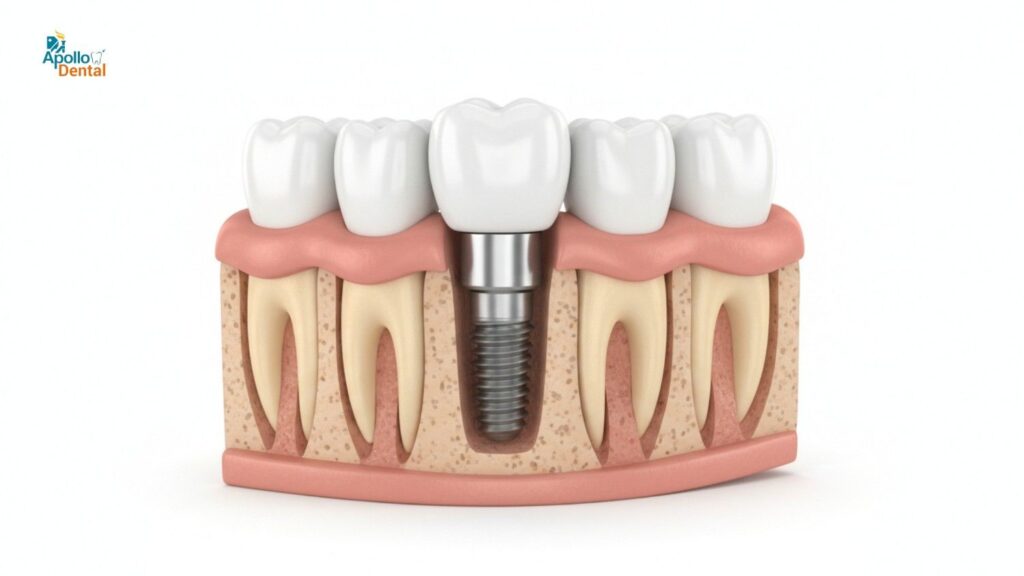
Table of Contents
Understanding Dental Implants in Simple Terms
A dental implant is not just a replacement tooth. It is a medical-grade titanium post that acts as an artificial tooth root. Once placed into the jawbone, it becomes stable enough to support a crown, bridge, or even a full set of teeth.
Because implants rely on your body’s ability to heal and bond with the bone, candidacy depends on biology, habits, and long-term oral care commitment, not just age or appearance.
Why Being the “Right Candidate” Matters
Dental implants are designed to last many years, often decades. Placing implants in unsuitable conditions can lead to complications such as poor healing, bone loss, or implant failure.
That’s why dentists focus on predictability, not just possibility.
A good candidate is someone whose oral and general health support long-term implant success.
Core Factors That Determine Dental Implant Eligibility
1. Healthy Gum Foundation
Dental implants sit beneath the gum line, which means gum health is non-negotiable.
You are more likely to be a good candidate if:
- Your gums are firm and pink, not swollen or bleeding
- There is no active periodontal infection
- You maintain consistent oral hygiene habits
If gum disease exists, it does not automatically disqualify you, but it must be treated first.
Author Bio

Foinix Digital
Foinix Digital Services believes every story has the power to inspire and connect. With a passion for creativity and meaningful storytelling, we craft content that brings ideas to life and helps brands share their voice with the world.
Recent Posts


Root Canal
October 30, 2025
Book Appointment
2. Sufficient Jawbone Support
Your jawbone holds the implant in place. Without enough bone, the implant cannot remain stable.
Many people assume bone loss means implants are impossible. That’s outdated thinking.
Today’s dentistry allows for:
- Bone regeneration procedures
- Implant placement in strategic bone areas
- Staged treatments that rebuild bone over time
Bone condition affects timing, not always eligibility.
3. Overall Health and Healing Ability
Dental implants involve minor surgery, so your body’s healing response matters.
Ideal candidates usually:
- Heal normally from cuts or dental procedures
- Have well-managed medical conditions
- Can safely undergo local anesthesia
Conditions like diabetes or blood pressure issues do not exclude implant treatment when properly controlled.
4. Smoking and Lifestyle Considerations
Smoking significantly reduces blood flow to the gums and bone, which slows healing and increases implant failure risk.
However, candidacy is not black-and-white:
- Former smokers often qualify without issue
- Patients willing to pause smoking during healing may still be considered
Dentists evaluate risk level, not labels.
5. Tooth Loss Situation
Dental implants are versatile. They can replace:
- A single missing tooth
- Several missing teeth
- Entire arches of teeth
They are especially beneficial when neighboring teeth are healthy, since implants do not rely on adjacent teeth for support.
6. Willingness to Maintain Long-Term Care
Dental implants are not “set and forget.”
Good candidates understand that implants require:
- Daily brushing and flossing
- Routine professional checkups
- Attention to bite balance and oral habits
Implants reward consistency.
Is There an Age Limit for Dental Implants?
There is no maximum age for dental implants.
What matters is:
- Bone maturity (jaw growth must be complete)
- General health, not birth year
Many older adults choose implants because they provide more comfort and stability than dentures.
Situations That May Require Extra Planning
Some patients need a customized approach, including those with:
- Past gum disease
- Bone loss from long-term tooth absence
- Teeth grinding habits
- Medical histories requiring coordination with physicians
Advanced diagnostics and planning often make implants possible even in complex cases.
When Dental Implants May Not Be Recommended (Yet)
Implant placement may be postponed if a patient has:
- Untreated oral infections
- Severe, uncontrolled medical conditions
- Heavy smoking with no willingness to reduce
- Poor oral hygiene compliance
In many cases, preparatory treatment can change this.
Why a Professional Implant Evaluation Is Essential
Online quizzes cannot determine implant eligibility.
A proper dental implant assessment includes:
- CBCT or 3D Imaging scans
- Bone and gum analysis
- Medical history review
- Bite and function evaluation
This ensures safety, longevity, and realistic expectations.
Benefits for the Right Candidates
For patients who qualify, dental implants offer:
- Stability that feels natural
- Improved chewing efficiency
- Clearer speech
- Preservation of jawbone structure
- A confident, natural-looking smile
They are widely regarded as the most reliable tooth replacement option available today.
Final Thought: The Best Way to Know Is to Ask
If you are missing teeth and wondering whether dental implants are right for you, the answer is rarely a simple yes or no. Most people fall somewhere in between, and that’s where professional guidance matters.
With the right evaluation and planning, many patients who believe they are “not eligible” discover that implants are, in fact, a very real option.
FAQ's
Only a dental implant consultation with imaging and health assessment can determine eligibility accurately.
Yes, as long as the gum disease is fully treated and under control.
Yes. Age alone does not affect implant success - overall health does.
Bone grafting or advanced implant techniques may allow treatment.
They require the same daily care as natural teeth, plus regular dental visits.