Burning Sensation in the Mouth and Spice Sensitivity: Signs of Oral Lichen Planus in Nallakunta
If chewing a simple mirchi bajji or a plate of spicy biryani suddenly feels like chewing on fire, your mouth may be trying to tell you something. A persistent burning sensation that flares up the moment anything spicy, hot, or sour touches your tongue and cheeks is one of the most common, and most overlooked early signs of oral lichen planus. Many patients dismiss it as “just mouth irritation” for months before finally getting it checked, by which time the discomfort has become a daily struggle.
At Apollo Dental Nallakunta, our Oral Medicine specialist, Dr. Ancy V. Ignatius, regularly sees patients from Nallakunta, Shivam Road, Vidyanagar, Narayanguda, Chikkadpally, Adikmet, Barkatpura, and DD Colony who initially think their symptoms are caused by food, stress, or “acidity,” only to discover they are dealing with a chronic inflammatory oral condition. This article breaks down what oral lichen planus is, how to recognise it early, and what treatment options are available close to home.
What Is Oral Lichen Planus?
Oral lichen planus (OLP) is a long-term inflammatory condition that affects the delicate mucous membrane lining the inside of the mouth. It happens when the immune system mistakenly attacks the cells of the oral lining, leading to inflammation, redness, and sometimes lace-like white patches on the cheeks, gums, tongue, or lips.
It is not contagious, and it is not caused by poor hygiene, but it is often misread as an ulcer, a fungal infection, or simple mouth irritation, which is why so many cases in and around Hyderabad go undiagnosed for a long time.
Why Spicy Food Suddenly Feels Unbearable
One of the clearest giveaways of oral lichen planus is a sharp change in how your mouth reacts to food. Patients often describe it like this:
- Spicy curries or chutneys that never bothered them before now cause instant burning
- Citrus fruits, tomatoes, or tamarind-based dishes sting the cheeks or tongue
- Hot tea, coffee, or soup triggers a raw, scalding feeling
- Even toothpaste with strong mint or SLS (sodium lauryl sulphate) starts to irritate the mouth
This happens because the inner lining of the cheeks and gums become thinner and more inflamed in OLP, exposing sensitive nerve endings underneath. What used to be a normal, protective layer of tissue can no longer buffer spice, sour, or heat the way it used to so ordinary meals start to feel painful.
Common Signs and Symptoms to Watch For
Oral lichen planus doesn’t always look the same in every patient, which is part of why it’s so frequently missed. Here are the signs our dental team commonly hears about during consultations:
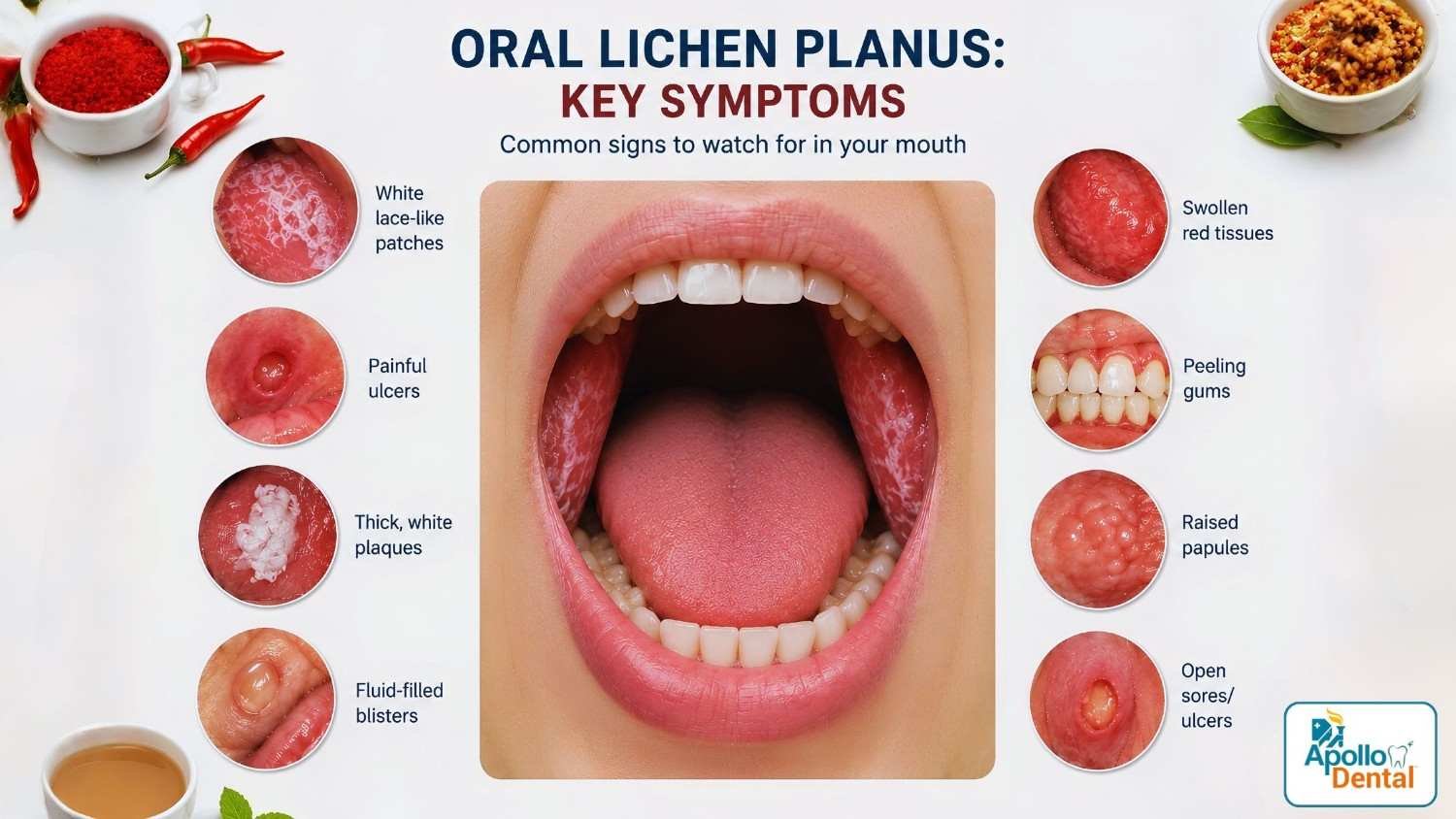
- A persistent burning or stinging sensation, especially with spicy, hot, or sour foods
- Lace-like white streaks or patches (called Wickham’s striae) on the inner cheeks, gums, or tongue
- Red, raw, or shiny patches in the mouth that don’t heal like a normal ulcer
- Painful sores or ulcers that come and go over weeks or months
- Tenderness or bleeding gums, sometimes mistaken for gum disease
- A dry or “rough” feeling on the inside of the cheeks
- Discomfort while brushing, eating, or even talking for extended periods
If you’re noticing two or more of these symptoms together, particularly the spice sensitivity combined with visible white patches it’s worth getting an oral examination rather than waiting it out.
What Causes Oral Lichen Planus?
The exact cause isn’t fully understood, but dental research points to a mix of triggers that can set it off or make it worse:
- Immune system responses to the body’s own immune cells attacking the mouth’s lining
- Genetic predisposition
- Chronic stress and anxiety, which is increasingly common with today’s fast-paced lifestyles
- Certain medications, including some high blood pressure, diabetes, coronary disease, and pain relief drugs like NSAIDS
- Viral infections : HCV, HPV, EBV, HBV, HHV 6, HHV 7 infection
- Allergic reactions to dental materials, metals, or pigments in fillings contribute to onset or flare-ups of OLP
Because the triggers vary so much from person to person, a proper diagnosis by an oral medicine specialist is essential rather than self-treating with home remedies.
Author Bio

Foinix Digital
Foinix Digital Services believes every story has the power to inspire and connect. With a passion for creativity and meaningful storytelling, we craft content that brings ideas to life and helps brands share their voice with the world.
Recent Posts


Dental
June 23, 2025
Book Appointment
How Is Oral Lichen Planus Diagnosed?
At a dental clinic, diagnosis usually involves a combination of:
- A detailed clinical oral examination to check for the characteristic white lace patterns and red patches
- A review of your medical history, medications, and any recent dental work
- A small tissue biopsy, when needed, to rule out other conditions and confirm the diagnosis under a microscope
- Blood investigations, for underlying viral infections
This step-by-step process matters because several other mouth conditions, viral or fungal infections, vitamin deficiencies, or early oral lesions can look similar on the surface but need completely different treatment.
Treatment Options Available Near Nallakunta
The good news is that oral lichen planus is manageable, even though it isn’t always fully “curable.” Treatment focuses on reducing inflammation, easing discomfort, and preventing flare-ups. Common approaches include:
- Topical corticosteroid gels or mouth rinses to calm inflamed tissue
- Prescription-strength mouthwashes to reduce burning and protect the lining
- Dietary guidance identifying and avoids personal trigger foods without unnecessarily restricting your diet
- Switching to a mild, SLS-free toothpaste that won’t aggravate sensitive tissue
- Stress management support, since flare-ups often coincide with high-stress periods
- Regular monitoring visits, as oral lichen planus needs periodic review to track healing and rule out complications
Every patient’s trigger and severity are different, which is why treatment plans at Apollo Dental Nallakunta are customised after a full oral medicine assessment rather than following a one-size-fits-all protocol.
Why Early Diagnosis Matters
Ignoring a burning mouth for too long doesn’t just mean more discomfort at mealtimes. Left unmanaged, oral lichen planus can:
- Make eating and speaking genuinely painful everyday
- Increase the risk of secondary infections in already-inflamed tissue
- In rare, long-standing cases, require closer monitoring due to a small increased risk of oral cancer changes over time
None of this is meant to alarm you, most cases respond well to timely care. But it does highlight why a burning sensation that lasts more than two to three weeks shouldn’t be brushed off as “just spicy food not agreeing with me anymore.”
Trusted Oral Medicine Care in Nallakunta and Nearby Areas
Apollo Dental Nallakunta is conveniently located on Shivam Road, New Nallakunta, making it easily accessible for residents across the surrounding neighbourhoods. Patients regularly visit us from:
- Nallakunta
- Vidyanagar
- Narayanguda
- Chikkadpally
- Adikmet
- Barkatpura
- DD Colony
Led by Dr. Ancy V. Ignatius,MDS, who specialises in Oral Medicine and Radiology with over 17 years of experience, our clinic is equipped to properly diagnose burning mouth symptoms, white patches, and chronic oral discomfort rather than treating them as a one-time ulcer. We combine a thorough clinical examination with modern diagnostic tools so that conditions like oral lichen planus are identified early and managed with a clear, personalised plan.
When Should You See a Dentist?
As a general guide, book a consultation if you notice:
- Burning or stinging that doesn’t settle within two to three weeks
- White, lace-like patches inside your cheeks or on your gums
- Ulcers that keep recurring in the same spot
- Increasing sensitivity to spicy, hot, or acidic foods
- Any unexplained soreness that affects eating or speaking comfortably
Catching these signs early makes treatment simpler, faster, and far more comfortable in the long run.
Final Thoughts
A burning mouth after a spicy meal is easy to shrug off until it starts happening every single day. If your relationship with food has quietly changed because your mouth just can’t handle spice anymore, it’s worth having it looked at by an oral medicine expert rather than guessing. Oral lichen planus is manageable with the right diagnosis and care plan, and getting checked early can save you months of unnecessary discomfort.
If you’re in Nallakunta or nearby Shivam Road, Vidyanagar, Narayanguda, Chikkadpally, Adikmet, Barkatpura, or DD Colony area and have been dealing with persistent burning mouth symptoms, book a consultation with Dr. Ancy V. Ignatius at Apollo Dental Nallakunta for a proper oral examination.
FAQ's
Oral lichen planus is a chronic but generally manageable condition. It isn't life-threatening or contagious, though it does need proper diagnosis and periodic monitoring, since long-standing cases occasionally require closer follow-up.
There is no guaranteed permanent cure, but symptoms can be effectively controlled with topical treatment, trigger-food management, and regular dental monitoring, allowing most patients to eat and speak comfortably again.
Spicy, acidic, very hot, and heavily salted or fried foods often trigger flare-ups. Citrus fruits, tamarind, chillies, and strongly flavoured toothpaste are common irritants, though triggers vary from person to person.
Not always. Burning mouth sensation can also result from vitamin deficiencies, fungal infections, acid reflux, or dry mouth. A dental evaluation is the only reliable way to confirm the exact cause.
An Oral Medicine specialist is best suited to diagnose and manage oral lichen planus, often working alongside your physician if an underlying health condition is involved.