Dental Scaling vs Teeth Whitening: Which Treatment Helps with Yellow Teeth?
“I just want my teeth to look cleaner. Should I get a cleaning or a whitening?”
Dentists in Hyderabad hear this question often. Because both treatments leave your smile looking fresher, many people assume they are the same thing. They are not. They work in different ways, solve different problems, and in some cases work best together.
This guide breaks down the difference between teeth whitening and scaling, so you know what to ask for on your next visit.
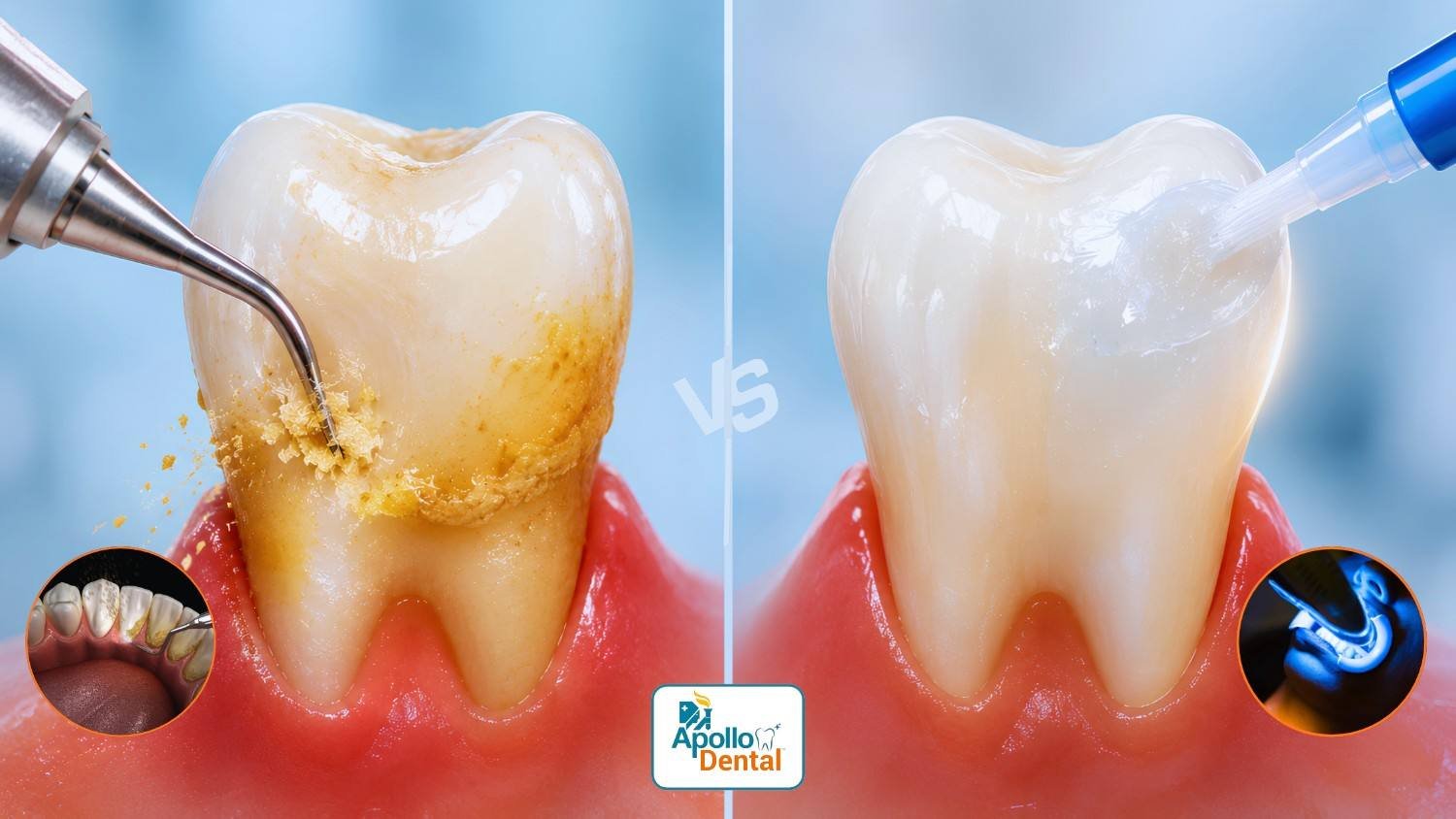
The Myth: “Whitening and Scaling Are the Same”
Many people believe that dental cleaning will make their teeth several shades lighter, or that teeth whitening will also clean away tartar. Neither is true.
- Scaling cleans: It removes deposits so your teeth and gums stay healthy.
- Whitening lightens: It changes how dark or yellow the tooth looks.
Think of a stained shirt. Washing it removes the dirt, but it won’t change the fabric’s colour. Bleaching changes the colour, but it won’t wash away mud caked on the surface. Teeth work in a similar way.
Quick Comparison at a Glance
Teeth Whitening | Dental Scaling | |
Main goal | Brighter smile | Healthy teeth and gums |
Works on | Stains and discolouration | Plaque and tartar buildup |
Suits | Stains from coffee, tea, wine, smoking, or ageing | Tartar buildup, plaque, gum problems |
Does not | Remove plaque, tartar, or treat gum disease | Remove or change natural tooth colour |
How it’s done | Whitening gel applied to the teeth | Scaler instrument used on teeth and below the gumline |
What Is Teeth Whitening?
Teeth whitening is a cosmetic treatment. It removes stains and discolouration to give you a brighter smile.
Who it suits
Whitening is usually considered for stains caused by:
- Coffee and tea: Your daily chai adds up over the years.
- Red wine and dark drinks
- Smoking and tobacco
- Natural ageing: Enamel thins over time, so the darker layer underneath shows through more.
How the procedure works
A whitening gel is applied to the teeth. The active ingredient breaks down stain molecules and lightens the colour of the tooth. Your dentist protects your gums, controls how long the gel stays on, and advises on aftercare. Some clinics also offer dentist-supervised take-home options.
What whitening does not do
- It does not remove plaque or tartar.
- It does not treat gum disease.
- It does not change crowns, veneers, fillings, or dentures.
If tartar is sitting on your teeth, whitening gel can’t reach the enamel properly. That is why a dentist may want to clean your teeth first.
What to know
Some people feel temporary sensitivity during or after whitening. Results vary from person to person, depending on the cause of staining, your habits, and how your teeth respond.
What Is Dental Scaling?
Dental scaling is done to remove plaque and tartar buildup to keep your teeth and gums healthy. It is a health treatment first. A brighter look is a pleasant side effect.
Author Bio

Foinix Digital
Foinix Digital Services believes every story has the power to inspire and connect. With a passion for creativity and meaningful storytelling, we craft content that brings ideas to life and helps brands share their voice with the world.
Recent Posts



Book Appointment
Why tartar matters
Plaque is a soft, sticky film of bacteria. If it isn’t brushed away, it hardens into tartar (calculus) in a matter of days. Tartar can’t be removed by brushing or flossing at home. It often looks yellow or brown and collects near the gumline and between the teeth. Left alone, it can irritate the gums and contribute to gum disease.
Who it suits
Scaling is usually recommended if you have:
- Tartar buildup you can see or feel
- Plaque on the teeth
- Gum problems such as redness, swelling, or bleeding while brushing
- Persistent, bad breath linked to buildup
- Not had a professional cleaning for a long time
How the procedure works
A dental tool known as a scaler is used to remove the tartar and plaque from the teeth and from below the gumline. Here is how a typical visit goes:
- Examination: The dentist checks your teeth and gums.
- Scaling: An ultrasonic scaler and, where needed, hand instruments remove deposits.
- Polishing: The tooth surface is smoothed, which also lifts light surface stains.
- Advice: You get tips on brushing, flossing, and how often to return.
What scaling does not do
Scaling does not change your natural tooth colour. Your teeth may look cleaner and a little brighter because buildup is gone, but the shade of the tooth itself stays the same.
Mild gum tenderness or sensitivity for a day or two afterwards is common.
Why Teeth Turn Yellow
Knowing the cause helps you pick the right treatment.
- On the surface (often helped by scaling): plaque, tartar, tea and coffee stains, tobacco residue.
- Within the tooth (often helped by whitening): ageing, natural shade, and some long-term staining.
- Deeper causes (may need other options): certain medications taken in childhood, excess fluoride during tooth development, or an old injury to a single tooth.
Many people have a mix of surface and deeper staining. A dental examination is the only reliable way to tell.
Which One Should You Choose?
Use this as a rough guide, not a diagnosis.
Scaling may come first if:
- Your gums bleed or look puffy
- You can see hard deposits near the gumline
- It has been more than a year since your last cleaning
- Your teeth look dull or rough
Whitening may be worth discussing if:
- Your teeth and gums are healthy but the shade has darkened
- Your teeth still look yellow after a recent cleaning
- Stains come mainly from coffee, tea, wine, smoking, or ageing
You may need both if:
- You have buildup and want a lighter shade. Dentists commonly suggest scaling first, then whitening.
You may need a different approach if:
- Only one tooth is darker than the rest
- The discolouration is from medication or fluoride
- You have cavities or gum disease, which need treatment before cosmetic work
Why Scaling Usually Comes Before Whitening
Painters clean a wall before painting it. The same logic applies here. Removing tartar and surface stain first lets the whitening gel work evenly, and you may find you need less whitening than you expected.
Who Should Check with a Dentist First?
Speak to a dentist before whitening if you:
- Are pregnant or breastfeeding
- Have sensitive teeth or exposed roots
- Have untreated cavities or gum disease
- Have visible crowns, veneers, or fillings
Simple Habits to Keep Teeth Cleaner and Brighter
- Brush twice daily with fluoride toothpaste for two minutes.
- Clean between teeth daily with floss or interdental brushes.
- Rinse with water after tea, coffee, or coloured foods.
- Avoid tobacco in every form, including gutka and paan with tobacco.
- Change your toothbrush every two to three months.
- Book regular dental check-ups as advised.
Looking for a Dentist in Nallakunta?
If your smile looks yellow and you’re unsure whether you need scaling, whitening, or both, start with an examination. A good dentist in Nallakunta will check your teeth and gums, explain the cause of the discolouration, and recommend only what you need.
Apollo Dental Nallakunta offers scaling and polishing, general dental care, and cosmetic consultations for patients in Nallakunta and across Hyderabad. See our website for contact details and clinic timings.
Reviewed by: Dr. Ancy V. Ignatius Clinic: Apollo Dental Nallakunta |
Disclaimer: This article is for general education and is not a substitute for personal dental advice. Please consult a registered dentist about your own situation.
FAQ's
Dental loupes are worn by dentists to magnify the area they are examining or treating. They help them see small details of the teeth, gums and existing dental work more clearly, and they support better posture.
They can improve visibility, which supports careful examination and precise work. They do not guarantee outcomes, because accuracy also depends on the dentist’s skill, diagnosis and the use of tools like X-rays.
Loupes are lightweight glasses with lower magnification (roughly 2.5x to 6x) that move with the dentist. A dental microscope is a larger fixed device with much higher magnification, often used for very detailed procedures.
Loupes can help a dentist notice visible early changes on tooth surfaces. They cannot see between teeth or inside them, so X-rays and a full clinical examination are still needed for a reliable diagnosis.
Common drawbacks are cost, weight, a narrower field of view at higher magnification and a learning curve. They also only show visible areas and cannot replace diagnostic imaging.