Why Gum Infections Increase During Monsoon in Nallakunta, Hyderabad
Every monsoon, dental clinics near Nallakunta see a sharp rise in patients with swollen, bleeding, or painful gums, and most of them are genuinely surprised. They brush regularly. They think they are doing everything right. Yet the rainy season quietly creates the perfect conditions for gum infections to flare up. This guide explains exactly why it happens and what you can do about it.
What Makes Monsoon So Hard on Your Gums?
The short answer: high humidity + seasonal illness + dietary changes = a bacteria paradise inside your mouth.
Here is the longer, more useful explanation:
- Humidity crosses 85–90% in Hyderabad during July–September. Warm, damp conditions inside the mouth allow anaerobic bacteria, the kind that destroy gum tissue to multiply at rates 3–4 times faster than during drier months.
- Your immune system is busy fighting monsoon colds, viral fevers, and stomach infections. When immunity is stretched, your gums lose part of their natural bacterial defence.
- Seasonal diet shifts toward hot teas, fried snacks, and street food all high in sugar and starch, which coat the gumline and become fuel for harmful bacteria.
- Mouth breathing from congestion dries out saliva. Saliva is the built-in antibacterial rinse of your body. Less saliva = more bacteria = more gum irritation.
The 3 Stages of Gum Infection - Know Where You Stand
Understanding which stage, you are in helps you decide how urgently you need to act:
Stage | What It Looks Like | Is It Reversible? |
|---|---|---|
Gingivitis | Red, puffy gums that bleed when brushing | Yes, fully reversible with cleaning |
Periodontitis | Pockets form below gumline; bone starts to deteriorate | No, manageable, not curable |
Abscess | Pus-filled pocket; swelling, fever, intense pain | Requires immediate dental drainage |
Key takeaway: Gingivitis caught early = simple fix. Gingivitis ignored = periodontitis that stays with you for life.
Warning Signs You Should Not Ignore This Monsoon
These symptoms are easy to brush off as “minor”, but each one is your gum tissue sending an SOS:
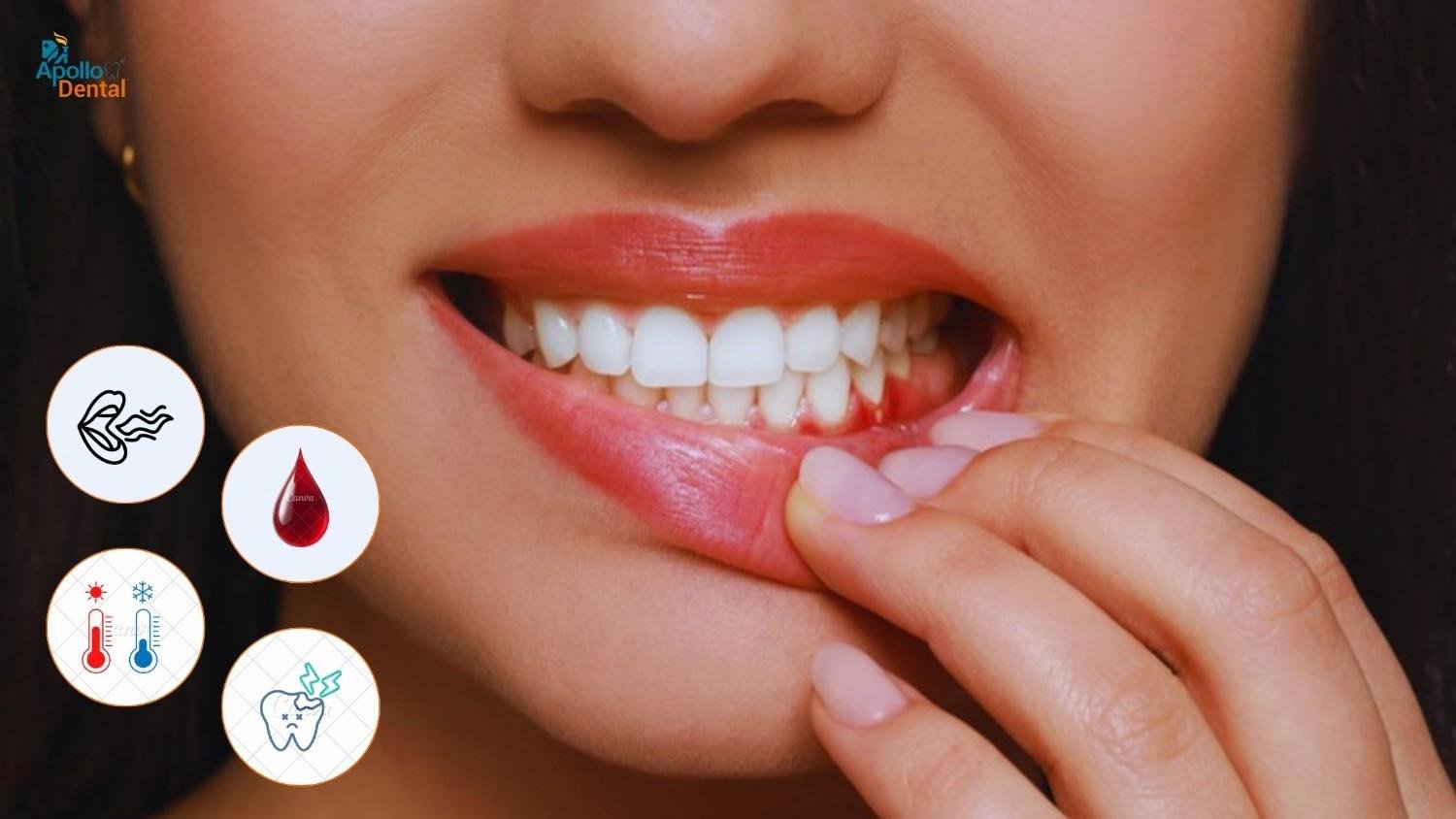
- Bleeding when brushing even gently. This is not normal, ever.
- Persistent bad breath that returns an hour after brushing
- Gums that look darker red, feel warm, or seem puffier than usual
- Sensitivity to cold water along the gumline
- A tooth that feels slightly loose or has shifted position
- Spaces appearing between teeth that were not there before
- Visible pus or discharge near the base of a tooth
- A gumline that appears to be “going down”, making teeth look longer
If you are ticking 3 or more of the above right now, please book a consultation this week. The window to reverse this without surgery is still open, but it will not stay open indefinitely.
Who Is Most at Risk?
Some groups face a significantly higher chance of monsoon gum flare-ups:
- Diabetics: High blood sugar directly weakens gum immunity. The relationship runs both ways; gum disease also makes blood sugar harder to control.
- Pregnant women: Hormonal changes make gums hyper-reactive to bacteria. Pregnancy gingivitis is a real, clinically documented condition.
- Smokers: Tobacco suppresses gum immunity and masks early bleeding, so infections go undetected until they are advanced.
- Teenagers wearing braces: Monsoon humidity combined with plaque trapped around brackets is a recipe for rapid gum inflammation.
- People on long-term medications: Certain blood pressure, antidepressant, and anticonvulsant drugs cause gum overgrowth creating deeper pockets for bacteria to hide in.
- Anyone who skipped their last dental visit: That six-month cleaning you put off? Monsoon bacteria will make you regret it.
Author Bio

Foinix Digital
Foinix Digital Services believes every story has the power to inspire and connect. With a passion for creativity and meaningful storytelling, we craft content that brings ideas to life and helps brands share their voice with the world.
Recent Posts


Book Appointment
How Apollo Dental Nallakunta Treats Gum Infections
Our approach is not a generic protocol. Every patient receives a personalised assessment before any treatment begins. Here is what the process looks like:
Step 1: Comprehensive Periodontal Evaluation
- Full gum tissue examination + pocket depth measurements
- Digital X-rays to check bone levels beneath the gumline
- Intraoral camera walkthrough so you see exactly what we see
Step 2: Scaling & Root Planing (Deep Cleaning)
This is not the same as routine cleaning. Scaling removes hardened tartar and bacterial deposits from both the tooth surface and below the gumline. Root planing smooths root surfaces so bacteria cannot easily re-attach.
- Non-surgical – no cuts, no stitches in most cases
- Completed in 1–2 visits for most patients
- Significantly reduces inflammation within days
Step 3: LASER Bacterial Reduction (LBR) with BIOLASE
BIOLASE LASER technology is one of the most effective tools available for eliminating bacteria that survive in deep gum pockets after mechanical cleaning.
- What it does: precisely targets infected tissue without affecting healthy gum around it.
- Healing: stimulates tissue regeneration and reduces post-treatment soreness.
- Time: completed chairside in a single appointment.
- Result: faster recovery, less bleeding, significantly lower reinfection rate compared to scaling alone.
Step 4: Antibiotic Therapy (When needed)
- Prescribed only for moderate-to-severe infections or confirmed abscesses
- Targeted to the specific type of infection not a generic broad-spectrum course
Step 5: Surgical Intervention (Advanced Cases Only)
- Periodontal flap surgery to access and clean deep bone-level pockets
- Performed under local anaesthesia patients are fully comfortable throughout
- Recommended only when non-surgical options have reached their limits
Your Monsoon Gum Care Checklist
Prevention during the rainy season is simpler than treatment. Follow this checklist every day:
Daily Routine
- Brush at a 45° angle to the gumline with soft bristles, 2 full minutes, twice a day
- Floss every night as the space between teeth is where monsoon bacteria are most aggressive
- Use an antibacterial mouthwash (chlorhexidine-based) once daily, ask your dentist for the right one
- Drink enough safe, filtered water as hydration keeps saliva flowing, which naturally fights bacteria
Diet & Lifestyle
- Rinse your mouth with water immediately after street food, chai, or sugary snacks
- Include Vitamin C-rich foods – amla, guava, citrus to strengthen gum tissue
- Replace your toothbrush every 3 months; during monsoon, bathrooms harbour fungal growth on bristles
This Season Specifically
- If you have seasonal cold or flu, switch to mouth rinses during night for a few days when night brushing is uncomfortable.
- If you are on antibiotics for a monsoon illness, follow up with a probiotic to protect your oral microbiome.
- Book a monsoon checkup now, not after the season ends as damage accumulates silently.
Why Choose Apollo Dental Nallakunta?
We are not just the nearest dental clinic, we are a full-spectrum oral health centre with specialists across every field of dentistry, right in your neighbourhood.
What We Offer | Why It Matters for Gum Care |
|---|---|
Dedicated Periodontist | Specialist-level gum disease diagnosis and management |
BIOLASE LASER Therapy | Faster healing, fewer sessions, minimal discomfort |
Digital X-rays + 3D Consultation | See exactly what is happening below your gumline |
Intraoral Camera | Real-time visuals of your gum condition — no guesswork |
Strict Sterilisation Protocol | Critical during monsoon when cross-infection risks rise |
Evening Slots (6–8 PM) | Convenient for working patients across the local area |
Flexible EMI Plans | No financial reason to delay necessary treatment |
The Bottom Line
Monsoon is not just tough on roads and rooftops it is equally hard on your gums. Humidity, weakened immunity, and seasonal diet changes combine to create conditions where gum infections thrive. Most people in our community ignore the early signs until the discomfort becomes undeniable. That delay is what converts a quick, affordable cleaning into a longer, more complex treatment course.
Your gums are the foundation of your oral health. A preventive visit during the early rainy season can save you from months of pain, discomfort, and unnecessary expense. If you are looking for the best dental clinic in Nallakunta, Apollo Dental Nallakunta offers advanced gum care, experienced specialists, and modern treatment options to help keep your smile healthy throughout the monsoon season. Do not put it off—early care makes all the difference.
FAQ's
Monsoon creates a warm, humid oral environment where harmful bacteria multiply far faster than usual. At the same time, seasonal colds and viral fevers keep your immune system occupied, leaving gum tissue more vulnerable to bacterial attack. The result is inflamed, fragile gums that bleed even with gentle brushing. Understanding the common gum bleeding causes and treatment options is important because early intervention can prevent the condition from progressing into a more serious gum disease. Add sugary chai and fried snacks (popular monsoon comfort foods), and bacteria have both the ideal conditions and fuel to thrive. If bleeding persists beyond 2–3 days, it is time to book a dental checkup.
Mild localised swelling that appeared in the last day or two is not usually an emergency, but it needs to be evaluated within 48 hours. However, go to the dentist the same day if you notice:
- Swelling spreading to your jaw, cheek, or neck
- Fever above 101°F accompanying the gum pain
- Difficulty swallowing or opening your mouth
- Visible pus near the base of a tooth
These signs suggest an abscess, a contained bacterial infection that requires prompt drainage and antibiotic treatment. Apollo Dental Nallakunta accepts urgent appointments. Call +91 89856 28677.
Yes, more than most people realise. Inflamed gum tissue has a compromised barrier, which allows bacteria to enter the bloodstream. Research has established direct links between untreated gum disease and:
- Increased cardiovascular risk (bacteria trigger arterial inflammation)
- Difficulty managing blood sugar in diabetics
- Higher risk of preterm delivery in pregnant women
- Worsened respiratory tract infections, bacteria from the mouth can be aspirated into the lungs
During monsoon, when your body is already handling multiple microbial stressors, an active gum infection adds significant additional burden. Ignoring the problem can affect not only your oral health but also your overall well-being. Seeking timely gum infection treatment in Nallakunta, Hyderabad helps prevent complications, reduces discomfort, and protects you far more than just your teeth.
LASER Bacterial Reduction (LBR) uses focused light energy to eliminate bacteria in deep gum pockets that mechanical instruments cannot fully reach. Compared to traditional scaling alone:
Scaling Only | Scaling + LASER (LBR) | |
|---|---|---|
Healing time | 7–10 days | 3–5 days |
Post-treatment soreness | Moderate | Minimal |
Bacteria elimination depth | Surface + moderate depth | Deep pockets targeted precisely |
Reinfection rate | Higher without follow-up | Significantly lower |
Apollo Dental Nallakunta uses the BIOLASE LASER system, a gold standard in dental LASER technology, completed chairside in one visit.
Treatment cost depends on the stage of infection and the procedures required. As a general guide:
- Gingivitis (early stage): Scaling & polishing most affordable, single session
- Moderate periodontitis: Deep cleaning + LASER 1-2 sessions
- Advanced periodontitis: Surgical intervention, assessed individually
We always provide a clear, itemized cost estimate before starting any treatment. If you are looking for reliable periodontitis treatment in Nallakunta, Hyderabad, our specialists will assess your condition and recommend the most effective treatment plan tailored to your needs. We also offer flexible EMI options because cost should never be a barrier to receiving quality dental care. Call us on +91 89856 28677 or walk into our clinic on Shivam Road, New Nallakunta, to schedule your consultation.